
How to Create Privacy with Small Lots
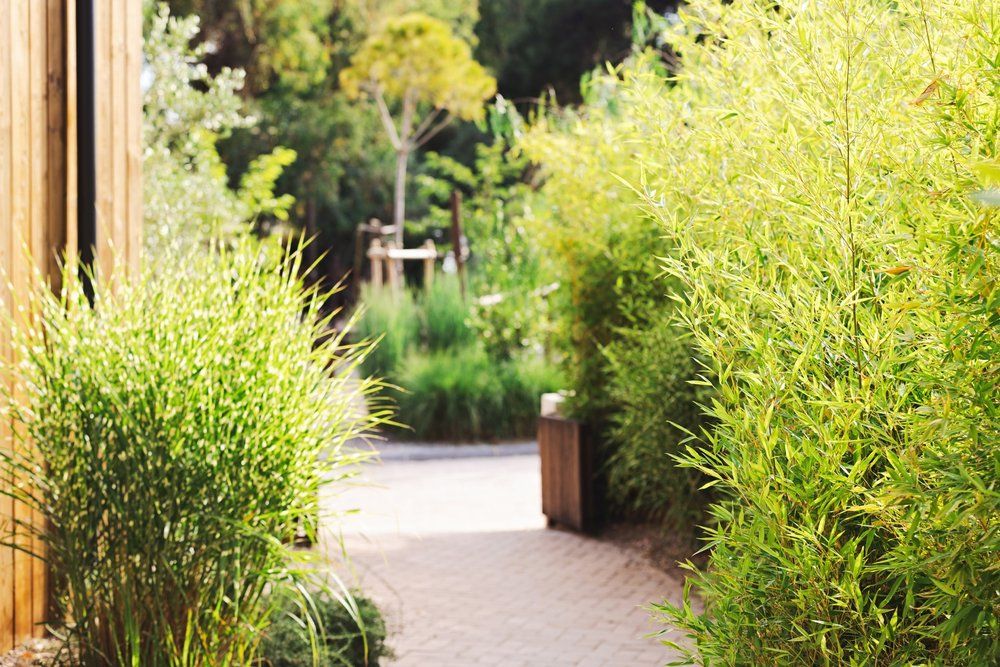
Your beach cottage sits twelve feet from the neighbor's deck — here's how to carve out a private outdoor life anyway.
Small lots are the Delmarva beach-town bargain: you get the location, the bay breeze, the walk to the sand — and a neighbor close enough to hear your phone calls from their kitchen. Privacy on a small lot isn't about building a fortress. It's about layering a few smart moves — plants, structures, and glass — so your patio, your windows, and your hot tub feel like yours again.
Living Screens: The Green Wall
Nothing softens a small lot like a living screen — a row of evergreen plants grown specifically to block sightlines. On Delmarva, a few standouts do the heavy lifting:
- Thuja 'Green Giant' arborvitae — the workhorse. Fast-growing, dense, deer-resistant once established, and tolerant of our coastal conditions. Planted roughly 6–8 feet apart, they knit into a solid wall within a few years.
- Wax myrtle — a Delmarva native that loves sandy soil and salt air, with a looser, more natural look than arborvitae. Great when you want screening that still feels like the Eastern Shore.
- Nellie Stevens holly — broad, dense, glossy, and fast for a holly. Good where you want a more formal hedge with year-round weight.
- Skip laurel (cherry laurel) — shade-tolerant, which matters on small lots where houses and fences steal the sun. Dense and quick once settled.
The golden rule of living screens: plan for the plant's mature size, not the cute one-gallon pot you bring home. That means checking the expected height and spread, and spacing so plants fill in without strangling each other — or your foundation, your fence, or the power lines. On a small lot, a screen that's too wide eats the yard you're trying to enjoy. When in doubt, ask a local nursery what stays narrow.
Fence Rules: Know Before You Build
Here's where Delmarva gets particular. Many beach towns restrict fence height and materials in front yards — think low picket fences, often capped around 3–4 feet, with rules about how "open" the design must be. The idea is to keep streetscapes open and sightlines clear.
Side and rear yards are usually more flexible, with taller privacy fences allowed — but "usually" is doing a lot of work in that sentence. Setback rules, corner-lot sight-triangle requirements, and historic-district design standards can all shrink what you thought you could build. And in some towns, the fence code differs for waterfront lots.
So: before you price a single panel, pull up your town's fence ordinance and read the actual numbers — height by yard, permitted materials, and whether you need a permit. Fence companies will build whatever you ask for; the violation notice arrives later, and it's yours.
Pergolas and Outdoor Rooms: Privacy Without Walls
When a fence can't do the job — or you don't want to stare at one — create a private zone instead of a perimeter. A pergola over the patio with a retractable canopy or shade sail overhead cuts the sightline from second-story windows, which is where most small-lot exposure actually comes from. Add outdoor curtains on the windward side and you've got a room that feels enclosed without a single wall.
Other structure moves that work on tight lots: a lattice or slatted-wood screen panel (freestanding, so it often sidesteps fence rules), a raised planter wall that doubles as a bench, or a simple shade sail angled to block the neighbor's deck view. The trick is thinking in three dimensions — most privacy problems on small lots come from above, not from the side.
Windows: Placement and Glass
If you're adding on or renovating, window placement is free privacy. A few principles:
- Go high. Clerestory windows and transoms bring in light while sitting above sightlines. A bathroom or bedroom window placed at six feet gives you daylight and nobody's view.
- Offset, don't align. When a new window would face the neighbor's window twelve feet away, shift it a few feet sideways or change its size. Misaligned windows feel private even at close range.
- Frosted and obscured glass. For windows that must face the neighbor, obscured glass (frosted, rain-pattern, or reed textures) lets in nearly full light while blurring detail. It's a fraction of the cost of repositioning a window, and it works in doors and sidelights too.
- Think about nighttime. The cruelest small-lot surprise: a window that's perfectly private by day becomes a lit stage at night. Plan for shades, blinds, or smart glass in rooms that face neighbors.
Layering: The Real Secret
No single move solves a small lot. The magic is in the layers — each one doing part of the job:
- Fence — defines the boundary and handles ground-level sightlines.
- Planting — softens the fence, adds height a fence can't reach, and looks better than lumber from your side.
- Structure — a pergola, screen panel, or canopy handles the overhead and diagonal views the first two layers miss.
A six-foot fence plus a staggered row of hollies in front of it plus a pergola with curtains reads as a private garden, not a compound. And layering buys you forgiveness: if the town caps your fence at four feet in the side yard, the planting behind it can legally reach ten.
Sound Privacy
Visual privacy is only half of it. On a still evening, voices carry across small lots like they're on a wire. You can't soundproof a yard, but you can mask: a recirculating fountain or bubbler near the seating area creates white noise that blurs conversation from both directions. Dense evergreen planting absorbs more sound than a bare fence does — another vote for layering. And the simplest move of all: keep the late-night gathering spot on the side of the house farthest from the neighbor's bedroom windows. Courtesy is a privacy strategy too.
HOA Architectural-Review Gotchas
If your cottage sits in a community with a homeowners association, the town code is only half the story. HOAs commonly require architectural-review approval for fences, sheds, pergolas, major plantings, and even paint colors — and their rules can be stricter than the town's (a town that allows six-foot fences doesn't help if your HOA caps them at four). Submit before you build: retroactive approval is a gamble, and "take it down" letters are expensive. Read the architectural guidelines themselves, not just the one-page summary — the details about materials, setbacks from common areas, and approved plant lists live in the fine print.
Talk to Your Neighbor First
Before the fence posts go in or the arborvitae order is placed, walk next door. A two-minute conversation — "we're thinking of putting a screen along the property line, wanted you to hear it from us" — prevents an astonishing number of disputes. Neighbors may even split the cost of a shared fence, point out a buried line you didn't know about, or ask for one small tweak that costs you nothing. On a small lot, you'll be living twelve feet apart for years. The cheapest privacy investment is goodwill.
Quick-Start Checklist
- Check the town code. Fence heights, materials, permits, setbacks — read the actual ordinance for your town.
- Check the HOA. Architectural-review rules can override what the town allows. Get written approval before building.
- Walk the sightlines. Stand on your patio, then stand on the neighbor's deck and look back. Note second-story windows — that's the real exposure.
- Plan for mature plant size. Check expected height and spread; don't plant a future monster six feet from the foundation.
- Call 811 before you dig. Utility marking is free — fence posts and root balls both find buried lines.
- Layer it. Fence + planting + structure beats any single fix.
- Talk to the neighbor. Before, not after.
Figures and terms are general information and change over time.