
Native Landscaping Ideas and Why It Matters
Your yard sits inside a watershed. Plant it like it matters.
Here's a fact that changes how you see your yard: almost every drop of water that leaves a Delmarva lot ends up somewhere you care about. Rain that sheets off a driveway or soaks through a fertilized lawn in Rehoboth or Lewes eventually reaches the Delaware Inland Bays. Water from the Eastern Shore side drains toward the Chesapeake. The fertilizer and pesticides that make a conventional lawn look perfect don't stay where you put them — nutrients like nitrogen and phosphorus ride stormwater into the bays, feeding algae blooms that cloud the water, and pesticides can harm the aquatic life the whole region depends on.
Native landscaping flips that script. Plants that evolved on this peninsula already know how to live here: they tolerate our sandy soils, our humid summers, our salt air, and our wet winters without a steady drip of chemicals. Most need far less water once established, and none need the fertilizer that pollutes the bays. As a bonus, they feed the locals — native plants support the pollinators, songbirds, and beneficial insects that a generic lawn-and-shrub yard starves.
This isn't an all-or-nothing project. Even converting one bed, or the strip along your driveway, makes a difference. Below are plant picks organized by the conditions Delmarva actually throws at you, plus a deer note, a lawn-reduction plan, and a checklist to get started.
What "Native" Really Means
Native plants are the ones that grew here before the garden center existed — species adapted over thousands of years to local soils, rainfall, salt exposure, and pests. That adaptation is the whole point. A native plant in the right spot is naturally thrifty with water and naturally resistant to local insects and diseases, which means you can skip the fertilizer spreader and the spray bottle. A good rule of thumb: match the plant to the condition. Don't fight your lot's salt, wet spots, or sand — plant for them.
Front Line: Salt-Spray Tolerant Plants
If you live near the ocean or the bays, your front line takes a beating: salt spray, wind, and sandy soil that drains fast. These natives shrug it off.
- Beach plum — A tough, spreading shrub that laughs at salt and wind, with white spring flowers and edible fruit in late summer (a favorite of birds — and of anyone who likes jam). Good as an informal hedge where a fence would look out of place.
- Northern bayberry — A fragrant, salt-proof shrub with waxy gray-green leaves and blue-gray berries that feed wintering birds. Handles poor sandy soil and grows into a dense screen. One note: it spreads by suckers, so give it room or plan to pull volunteers.
- Seaside goldenrod — A fall-blooming perennial with golden flower spikes that feed migrating monarchs and other pollinators. Thrives in sand, tolerates salt spray, and its tidy clumps look intentional, not weedy — especially in groups.
Soggy Spots and Low Lots
Much of Delmarva sits flat and low, and plenty of lots have a corner that stays wet after rain. Instead of fighting the water, plant the plants that want it.
- Inkberry holly — An evergreen native holly that tolerates wet soil far better than most evergreens. Its dense, dark-green foliage makes a fine hedge or foundation planting, and the black berries feed birds through winter. It can handle periodic standing water.
- Switchgrass — A graceful native grass that stands up through winter, with airy seed heads that catch the light. Excellent in wet swales and rain gardens, and its deep roots hold soil against erosion. Leave the seed heads standing for winter interest and bird food.
- Red maple — One of the peninsula's classic native trees, at home in both wet and average soils. Brilliant red fall color, and its early spring flowers feed native bees when little else is blooming. Give it space — it becomes a large shade tree.
- Sweetbay magnolia — A beautiful small-to-medium tree with lemon-scented white flowers in early summer and silvery-backed leaves that shimmer in the breeze. Tolerates wet feet and is semi-evergreen in mild winters, so it keeps some foliage nearly year-round.
General Beds and Borders
For the average bed — average soil, average sun — these workhorses deliver flowers, structure, and wildlife value with almost no fuss.
- Black-eyed Susan — The gold standard of easy native color: bright gold flowers with dark centers from summer into fall, beloved by bees and butterflies. Self-seeds politely to fill gaps.
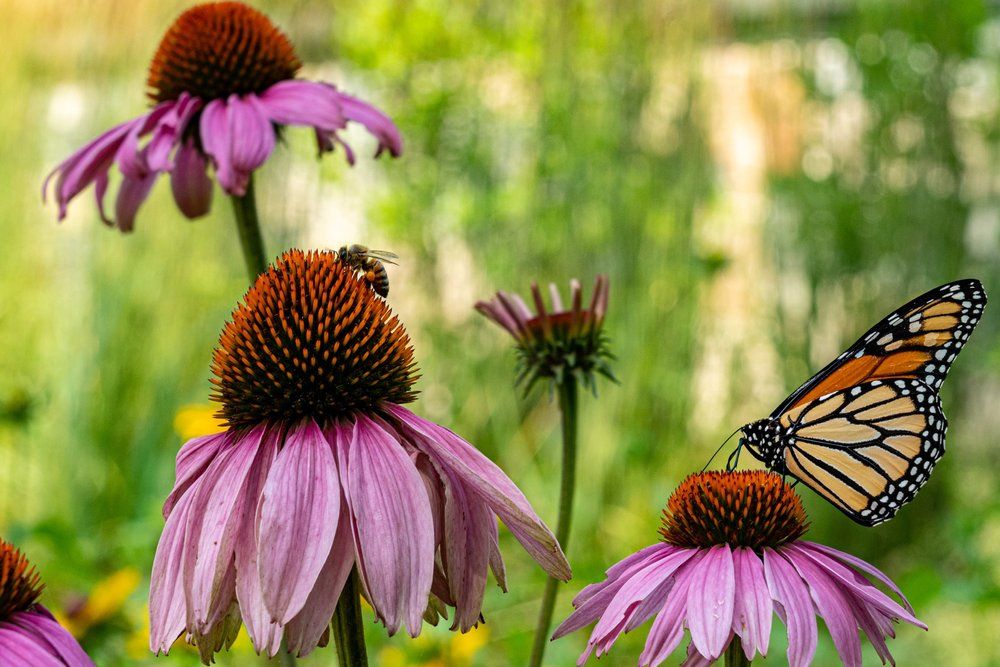
- Echinacea (purple coneflower) — Bold purple summer flowers that butterflies mob, followed by seed heads that goldfinches crack open in fall and winter. Leave the heads standing — the "messy" look is a bird feeder.
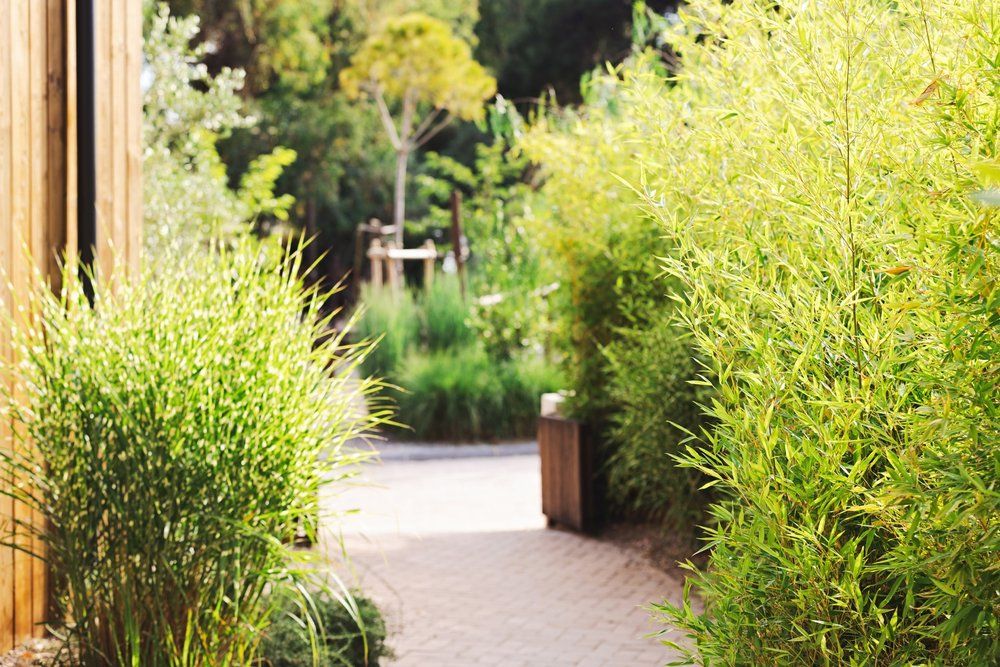
- Little bluestem — A compact native grass with blue-green summer foliage that turns coppery-red in fall. Adds texture and movement to any bed, tolerates poor soil and drought once established, and needs only a once-a-year spring cutback.
- Serviceberry — A small tree or large shrub with four seasons of interest: white spring flowers, edible June berries (plant it where you can steal a few before the birds do), red fall color, and smooth gray bark. Works near patios and in smaller lots.
- Eastern red cedar — A tough native evergreen for windbreaks, screens, and wildlife habitat. Its blue berries feed cedar waxwings and other birds all winter, and it tolerates everything from dry sand to salt. Aromatic foliage, too.
Rain Gardens: Your Low Spot, Working Hard
A rain garden is simply a shallow, planted depression designed to catch stormwater — roof runoff, driveway sheet flow — and let it soak into the ground instead of running into the street and the bay. It's the single most useful feature a bay-friendly yard can have.
Where they go: Downspout outlets, the bottom of a slope, or that spot where water already collects. Keep them at least 10 feet from your foundation, and don't place one over a septic drain field or where water sits for more than a day or two — a rain garden should drain within 24 to 48 hours.
How they work: Shape a shallow bowl (typically 6–8 inches deep), amend the soil so it drains, and plant it in zones — the wet-loving picks from the "soggy" list above in the bottom, general-bed plants on the sloped edges. Mulch with shredded bark (not floating chunks), and you're done. A well-built rain garden needs no fertilizer, very little watering after the first year, and quietly filters runoff before it leaves your lot.
Deer: The Delmarva Reality Check
Let's be honest: deer pressure is a huge issue on the peninsula, and no plant is truly deer-proof. A hungry deer will sample anything. That said, deer tend to avoid strongly aromatic, fuzzy, spiky, or bitter foliage — which covers several of the picks above. From this list, deer tend to avoid northern bayberry (aromatic), inkberry holly, seaside goldenrod, switchgrass, little bluestem, eastern red cedar, and echinacea. They are more likely to browse serviceberry (especially young shoots and fruit), beach plum, and sweetbay magnolia.
Practical advice: protect young trees and shrubs with cages or fencing for the first couple of years until they're established, group the most deer-resistant plants closest to the woods' edge, and ask local nurseries what's getting browsed in your specific neighborhood — deer pressure varies enormously from one community to the next.
Reduce the Lawn
The average lawn is the thirstiest, hungriest part of a Delmarva yard: it wants water in summer, fertilizer in spring and fall, and pesticides to stay weed-free — and all of that runs toward the bays. You don't have to tear it all out. Start by shrinking it:
- Convert the hard parts first. The narrow strip along the driveway, the slope you hate mowing, the soggy corner that never grows well anyway — these become native beds, a rain garden, or a meadow patch.
- Mow high and leave the clippings. Taller grass (3–4 inches) shades out weeds and needs less water. Clippings left on the lawn return nutrients for free.
- Skip the "weed and feed." Spot-treat or hand-pull weeds instead of broadcast herbicides, and skip fertilizer entirely in any bed you've converted to natives.
- Try a meadow patch. Even a 10-by-10-foot corner planted with little bluestem, black-eyed Susan, and echinacea — mowed once a year in early spring — feeds pollinators all season and needs nothing after year one.
Your Starter Shopping and Install Checklist
- ☐ Walk your lot after a heavy rain. Mark where water collects, where salt spray hits, and which areas are full sun, part shade, or shade.
- ☐ Measure the beds or areas you want to convert, and sketch a rough plan — even a phone photo with scribbles works.
- ☐ Buy from a nursery that sells straight native species (not just "native-ish" ornamentals) — local native plant sales and reputable regional nurseries are your best sources.
- ☐ Plan for the season: fall is an excellent planting time on Delmarva (warm soil, cool air, winter rains ahead); spring works too.
- ☐ Water new plantings deeply for the first growing season. After that, most of these picks are on their own.
- ☐ Mulch new beds 2–3 inches deep with shredded bark or leaf mulch — skip landscape fabric, which blocks the soil life your plants need.
- ☐ Protect young shrubs and trees from deer with cages until established.
- ☐ Keep a simple log: what you planted, where, and when. It'll save you from re-buying the same plant twice.
Figures and availability are general information and change over time.